Digital transformation for nonprofits isn’t just about tools. It starts with a clear strategy, an engaged team, and well-defined needs. Through two real-world examples, learn how to move forward step by step, without losing your way.
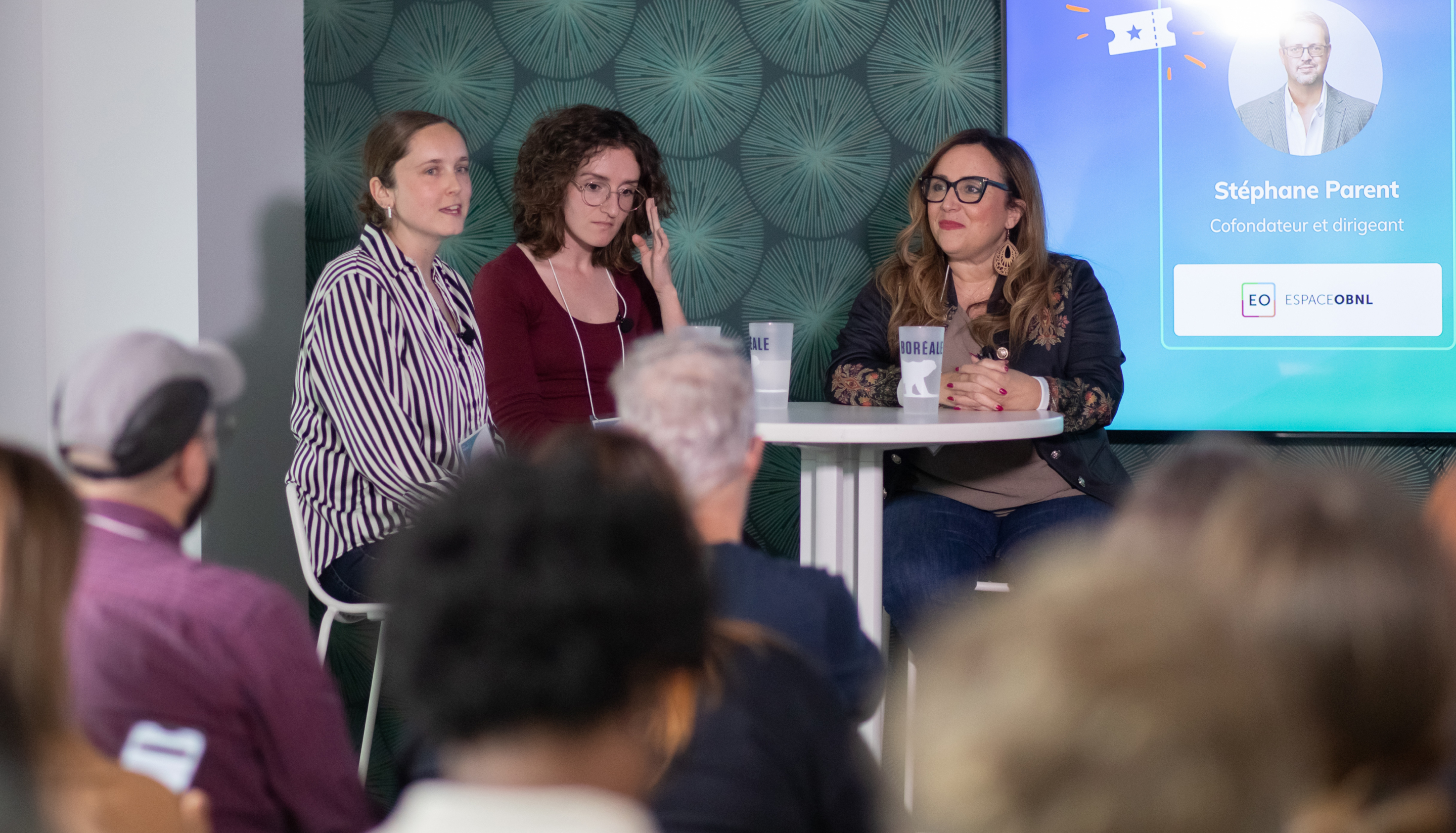
Where do you start when you want to simplify operations and increase impact? And how do you keep moving once you’ve taken the first steps? Setting clear goals, getting your board of directors on board, securing budget, and mobilizing your team are all common challenges in a digital project.
In this article, we’ll share insights from association leaders from Culture Laval and who have led (and are still leading) their digital transformation, from identifying needs and board approval, to change management and user training.
You’ll walk away from this article with practical takeaways to start your own digital transformation and move to the next stage.
1. Digital Transformation Isn’t “Just” A Tool
When we talk about digital transformation, we often think about a website or communications. But it extends much further to databases, member management, internal tools, automation, security, compliance, automation and more.
The goal isn’t to “look modern.” The goal is to be more efficient, clearer for members, and more sustainable over time.
As Marie-Pier Blain, Administrative Director at Culture Laval, explained, their digital shift started with a simple realization: they needed to simplify processes to better serve their community—without their team burning out.
2. Start With Needs (Not Tools)
A common reflex is to ask: “Which tool should we choose?”
A better reflex is: “What do we actually need?”
Sihem Neggaz, Director of the Quebec Business Women’s Network (RFAQ), explained that after the pandemic, they experienced a situation many nonprofits will recognize: too many options, too many platforms, and widespread fatigue caused by digital complexity.
Their key lesson: go back to mission and objectives first, then choose tools that support them.
Key takeaways:
- First clarify the mission and priorities
- Next identify pain points and real needs
- Finally, choose a solution that achieves your goals
3. A Common Starting Point: When the Organization is Running Out of Steam
Both organizations described very typical nonprofit pain points.
Manual work and scattered data
At Culture Laval, member management was entirely manual: databases spread across multiple Excel files, invoices created one by one, and difficult follow-up when someone left their role.
Over time, this created a heavy operational and mental load—and, most importantly, a high risk of losing information.
Tool overload
Culture Laval also shared that they had accumulated tools over the years, each added to solve an immediate need. The problem was that these tools didn’t connect with each other.
The result: duplicated data, fragmented processes, and the feeling of a system that’s too complex for a small team.
Key takeaway: The “aha moment” often comes when you realize the blocker isn’t a lack of ideas or motivation—it’s a lack of consistency and simplification across tools.
4. Clear member value is a real accelerator
A successful digital transformation isn’t only internal. It also needs to create clear value for members.
For Culture Laval, a great example is their new member portal, which significantly improved the user experience.
Members can now easily access:
- their training registrations,
- their applications or requests,
- their appointments,
- their history with the organization.
One important point: member support matters. Some members are very comfortable with digital tools, while others are not. The tool alone isn’t enough—you need time to guide, train, and reassure.
Key takeaway: Digital transformation works best when members quickly feel a concrete benefit—and when you support them through adoption.
5. Change management is always at the heart of the project
Digital transformation is as much a people project as it is a technology project.
For the RFAQ, what made the difference was thinking in terms of “digital awareness”:
- talking about it regularly internally,
- explaining why change is happening,
- showing the benefits,
- keeping an ongoing dialogue within the team.
A common (and sometimes unspoken) reality: some people struggle to adopt change—not because they’re unwilling, but because transformation affects habits, roles, and even workplace culture.
Key takeaway: Planning for change management means planning time, clear guidance, and consistent internal communication.
6. Getting board buy-in: the key is a well-scoped project
Boards of directors often respond with: “too expensive,” “too complicated,” or “we don’t have the staff.”
At Culture Laval, their approach to getting approval was highly structured:
internal assessment,
- external validation,
- vendor comparisons,
- funding secured,
- end-to-end project presentation.
Because the project was documented and realistic, the board clearly understood the logic and benefits.
At the RFAQ, mobilization came from staying anchored in the organization’s purpose: showing how digital supports their mission and strengthens members’ economic and social impact.
Key takeaway: Boards are more likely to support a project when you focus on impact, mission, and real needs—not just a tool.
7. Automate to free up time (and serve members better)
A very concrete example of large-scale modernization at the RFAQ: they automated a major part of member services using CRM workflows and conditional responses.
They even chose to reduce phone support in favour of a model built around:
- automation by default,
- human support for complex cases.
Culture Laval also benefits from automating repetitive tasks like sending confirmations, renewal follow-ups, contact segmentation, and more.
Key takeaway: Automation doesn’t remove the human element. It gives people time back—and makes the member experience more consistent.
8. Train, document, and transfer knowledge—or it won’t stick
Transformation doesn’t stop once the tool is launched.
Culture Laval, for example, is building internal procedures because they know teams change over time—and an undocumented system always becomes a headache for new staff.
The message is simple:
- train users, yes,
- keep knowledge accessible,
- distribute ownership across the team,
- avoid relying on one person to hold everything.
Key takeaway: If knowledge isn’t shared, the organization loses the benefits the moment someone changes roles.
9. Keep moving forward—without a “big bang” approach
Final advice: take it step by step.
Every nonprofit is different. Copying a solution that worked elsewhere is rarely the right move.
As Sihem Neggaz (RFAQ) put it: “Take your time and move in small steps, because going backward is expensive.”
Culture Laval sees digital as a continuum: a long-term trajectory, with different priorities each year.
Key takeaway: Digital transformation isn’t a sprint. It’s structured progress.
Conclusion
Digital transformation isn’t simply about choosing a more modern tool. It relies on an end-to-end approach:
start from needs and mission,
- clarify objectives,
- structure your data,
- mobilize your team and your board,
- automate wisely,
- support members through adoption,
- document for long-term sustainability,
- move forward step by step.
The experiences of Culture Laval and the Réseau des femmes d’affaires du Québec show that a well-executed digital shift becomes a real lever: less friction, more clarity, more value for the community—and ultimately, greater impact.
Jamie, CMO



100% scalable
Simplify your nonprofit management!
Discover Yapla, the complete and scalable platform that adapts to the needs of over 100,000 nonprofits at every stage of their development.
.png)


.svg)


.svg)


.svg)